
NASA’s Swift Observatory Ends Historic 22 Year Mission

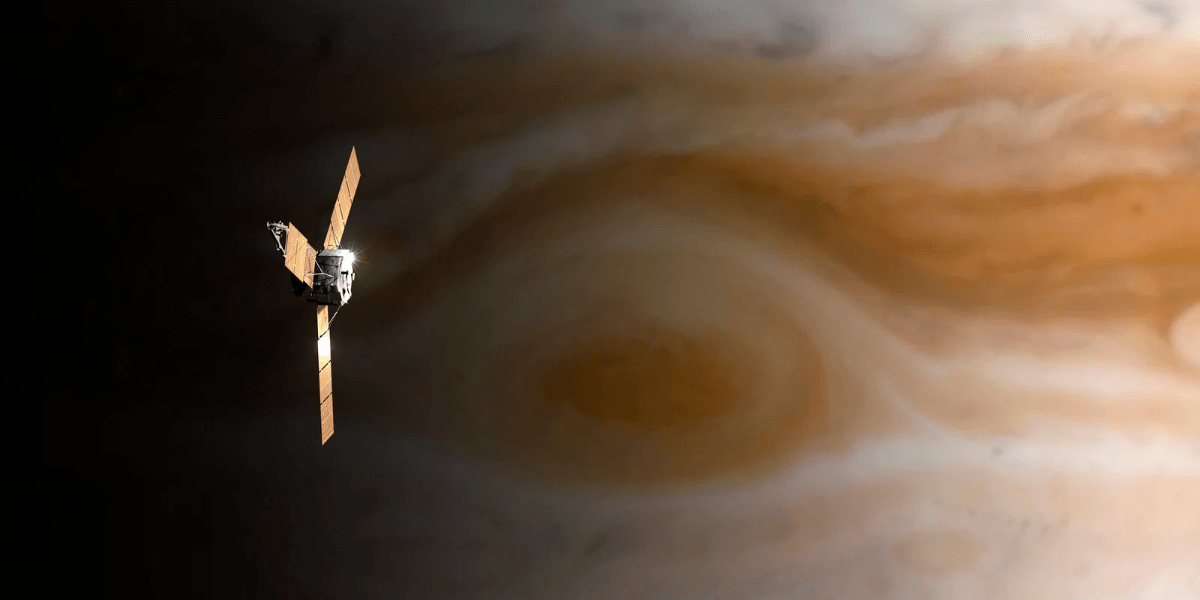
NASA’s Swift Observatory returns to Earth after nearly 22 years, closing a remarkable chapter in American space exploration.
On November 4, 2026, a remarkable chapter in American space exploration came to an end as NASA’s Neil Gehrels Swift Observatory reentered Earth’s atmosphere after nearly 22 years in orbit. The spacecraft, which helped scientists study some of the universe’s most powerful explosions, completed a mission that lasted more than ten times longer than originally planned. Its final descent marked both the loss of an important scientific instrument and a moment to recognize decades of discoveries that transformed modern astronomy.
The U.S. Space Force confirmed that the observatory reentered the atmosphere at 7:39 a.m. Eastern Standard Time over North Sumatra, Indonesia. Most of the approximately 3,200 pound spacecraft was expected to burn up during its descent, although some components may have survived. The event brought a definitive conclusion to one of NASA’s longest serving space observatories.
NASA’s Swift Observatory Leaves A Lasting Scientific Legacy
Launched on November 20, 2004, Swift was originally designed for a two year mission focused on detecting gamma ray bursts, brief but extraordinarily powerful explosions occurring across the universe. These events can release enormous amounts of energy in seconds, making them difficult for conventional telescopes to observe.
Swift addressed that challenge through an innovative combination of three scientific instruments. Its Burst Alert Telescope detected high energy events, while its X ray and ultraviolet optical telescopes rapidly examined their locations. The observatory could typically redirect its instruments toward a newly detected burst within approximately one minute.
That speed changed how astronomers investigated distant cosmic events. Instead of learning about an explosion after its brightest moments had passed, researchers could collect information while its fading light remained visible.
Over its operational lifetime, Swift observed more than 2,000 gamma ray bursts and over 1,400 supernova explosions. Its observations also supported research involving black holes, active galaxies, comets, and asteroids. Data collected during the mission contributed to approximately 7,000 scientific papers.
Why The Historic Space Mission Came To An End
Despite its extraordinary lifespan, Swift faced a challenge that eventually became impossible to overcome: atmospheric drag.
Although space is often described as a vacuum, traces of Earth's atmosphere extend hundreds of miles above the surface. Satellites traveling through this region experience resistance that gradually reduces their orbital altitude.
Recent solar activity intensified the problem by heating and expanding Earth's upper atmosphere. As a result, Swift experienced increasing drag and descended faster than expected.
NASA explored a commercial servicing mission intended to raise the observatory into a higher orbit. However, the effort concluded without an orbital boost. The agency subsequently resumed scientific observations while preparing for the spacecraft's eventual descent.
On October 20, Swift reached an altitude of approximately 171 miles, where atmospheric resistance prevented stable scientific observations. Mission controllers ended operations as the spacecraft approached its final days.
The sequence highlighted a growing challenge for space agencies: maintaining aging satellites while managing changing conditions in low Earth orbit.
What NASA’s Swift Observatory Taught Scientists
Swift's greatest contribution was not simply its longevity. It demonstrated how quickly coordinated observations could improve scientific understanding.
In 2005, the observatory detected the fading X ray emission from an exceptionally brief gamma ray burst. This discovery helped support scientific explanations connecting certain short bursts to collisions involving neutron stars, extraordinarily dense remnants of massive stars.
The mission also demonstrated the value of collaboration between space telescopes and ground observatories. Swift regularly shared alerts that allowed researchers worldwide to investigate rapidly changing astronomical events.
Its scientific legacy remains accessible. The observatory produced more than 1.5 million ultraviolet and optical images and approximately 12 terabytes of archived scientific information.
Researchers can continue analyzing these observations long after the spacecraft itself has disappeared. That archive may support discoveries involving distant galaxies, stellar explosions, and other astronomical phenomena for years to come.
What The Mission’s End Means For Future Space Exploration
The conclusion of Swift's mission raises important questions about the future of satellite maintenance and scientific observation.
NASA's unsuccessful attempt to extend the spacecraft's orbit nevertheless provided experience with emerging satellite servicing technologies. Such capabilities could eventually allow operators to maintain spacecraft that would otherwise be retired.
Swift also demonstrated the importance of flexible mission design. Although originally built to investigate gamma ray bursts, the observatory became a versatile research platform capable of studying many different astronomical objects.
For California's scientific community, including researchers working in astronomy, aerospace engineering, and space technology, the mission offers a practical example of how advanced instruments and international scientific cooperation can produce lasting results.
The mission's conclusion also highlights the importance of preserving scientific data and developing future instruments capable of responding quickly to astronomical events.
A Scientific Legacy That Continues Beyond Swift
The disappearance of NASA's Swift Observatory does not erase its contributions. Its nearly 22 years of observations remain part of a scientific record that researchers and future generations can continue exploring.
For readers interested in astronomy, NASA provides public access to mission information, scientific discoveries, and educational resources through its official website.
Swift's final journey on November 4, 2026, serves as a reminder that the value of space exploration extends beyond the lifespan of any single spacecraft. The instruments eventually fall silent, but the knowledge they produce can continue expanding humanity's understanding of the universe.

Golden State Review Contributor
Golden State Review Contributor
This article features branded content from a third party. Opinions in this article do not reflect the opinions and beliefs of Golden State Review.
This article features partner, contributor, or branded content from a third party. Members of the Golden State Review editorial staff were not involved in the creation of this content. All views and opinions are those of the contributor alone.